
When surface drains are usually the topic
These problems are about water you can see collecting, not only soil that stays soft underfoot.
- A low spot that ponds after every storm
- Concentrated runoff from a driveway, patio, or downspout splash
- Water that has a clear “bowl” in the yard
- Hardscape that sheds water into one corner
- A pooling location you could cover with a grate
- Surface water that sits because it has nowhere to run
How catch basins and surface drains work
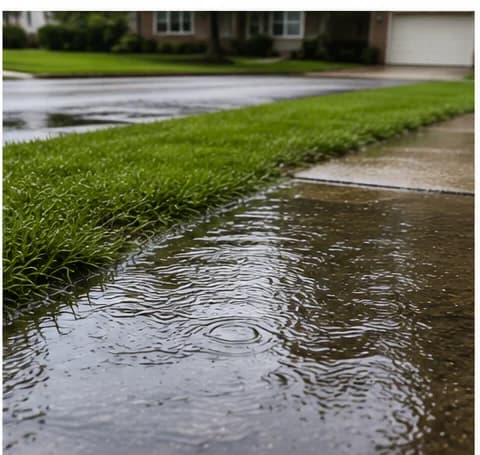
A grate or inlet sits at the low point. Water on the surface falls into a basin or drain body. From there, a solid pipe carries it downhill to an outlet.
A catch basin also gives debris a place to drop before the pipe, which can make maintenance more realistic than a grate tied straight to a long run of pipe. The basin still has to be reachable.
The drain does not eliminate water. It relocates it. If the outlet is too high, too close to the house, or aimed at a neighbor, the puddle simply moves.
Surface drains pair well with grading. If the yard does not slope toward the inlet, water may miss the grate. A shallow swale or a small grade correction is sometimes what makes the basin work.
Catch basin vs. French drain
A French drain is a gravel trench with perforated pipe. It is built for water in the soil. A catch basin is an inlet at the surface. It is built for water you can watch collect.
Choose a surface drain when the problem is a specific pooling location, hardscape runoff, or a low spot that fills from above. Choose a French drain when the lawn is saturated and water seems to come up through the ground.
Some yards need both. Surface water can be caught at a basin; groundwater that still soaks a lower lawn may need a French drain farther along the path. That is a site decision, not a default package.
Downspout water that hits the ground and ponds is often a candidate for a basin or an underground downspout line. If the same roof water is soaking a wide area of soil, a French drain may still be part of the plan.
What to evaluate for a surface drain
The grate location is only half the design. The pipe run and the outlet do as much work.
- The exact low spot where water ponds
- How much surface area drains to that spot
- Whether hardscape or downspouts concentrate the flow
- A pipe path with enough fall to the outlet
- A discharge point that will not create a new puddle
- Access for cleaning the basin or grate later
Related drainage solutions
Surface drains sit in the middle of a larger yard-drainage picture.