
What downspout pooling looks like
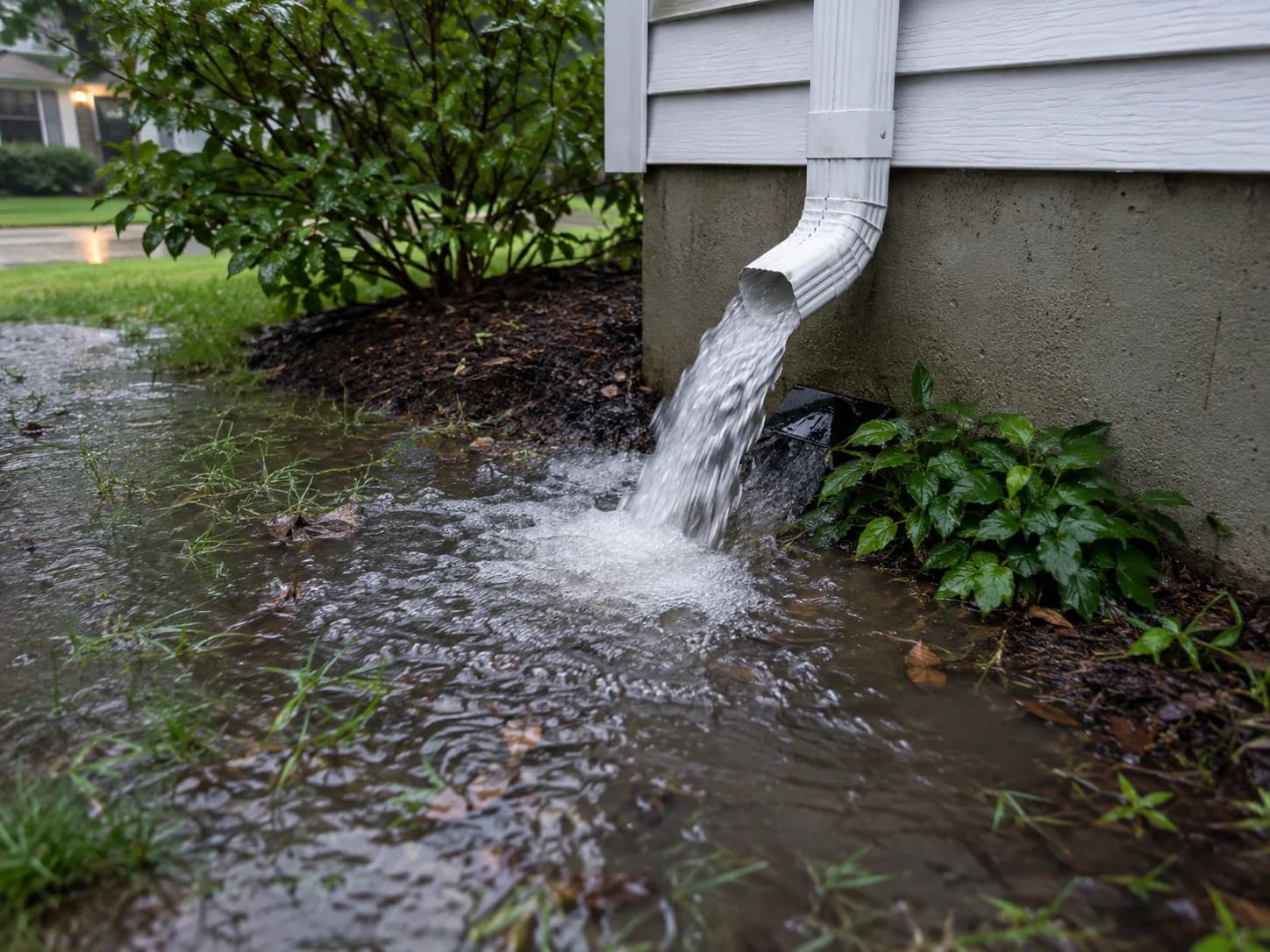
After rain, the wettest circle on the property is right at the splash block. Mulch washes out. The soil hollows. A planting bed turns to soup. Water may run back along the foundation instead of away from it.
On a calm day you can still see the scar: eroded soil, stained siding at the outlet, a depression that holds the next storm’s first gallon.
- Water pooling beneath the downspout after rain
- Erosion or a washed-out bed at the outlet
- A soggy ring in the landscaping along the house
- Discharge that flows back toward the wall
- A splash block that is too short for the slope
Why that one outlet overwhelms the yard
Roof runoff is a lot of water in a short time. Ending the downspout two feet from the wall puts that burst into a small patch of soil. If that patch is also a low area, the water sits. If the ground tilts toward the house, the water comes back.
A splash block that aims at a planting bed, a walk, or a window well cover is still dumping into a trap. The downspout did its job. The yard was never given a second job: carry that water the rest of the way out.
Ways to get roof water away from the house
The simplest version is a longer above-ground extension aimed at ground that already falls away. That only works if the extra water will not pool in the next low spot.
When a hose across the lawn is impractical, downspout drainage can go underground: a solid line from the outlet to a farther discharge. Some properties tie that line into a catch basin or another exterior drain that already has a safe outlet — see catch basins and surface drains.
If the ground next to the house slopes in, grading may be needed so the discharged water does not run back. A French drain is not the first tool for a downspout puddle. It can become relevant if, after the roof water is moved, the soil in that area still stays saturated. Yard drainage is how those pieces get combined.
What this page is not
This is exterior roof-runoff management. If the only wet ground you have is under a downspout, the honest starting point is the outlet and the first stretch of yard it empties onto.
What to check at each downspout
- How close the outlet is to the wall
- Whether splash blocks point away, sideways, or back at the house
- The slope in the first stretch of yard beyond the outlet
- A place that can accept a heavy burst of roof water
- Walks, pads, and beds that block a simple extension
Related drainage solutions
Start with the downspout path. The rest of the yard drainage plan is for water that is not coming off the roof.