
Signs the slope may be the issue
If water crosses the yard as a sheet, runs toward the house, or sits in a dish of lawn, shape is part of the diagnosis.
- The yard tilts toward the house instead of away
- A low area that collects every storm, even when nearby ground is higher
- Surface runoff from a neighbor or a driveway that has no path out
- Water that travels across the lawn rather than soaking in one wet pocket
- A side yard that acts like a trough between two homes
- Drains that underperform because water never reaches the inlet
How grading and swales move water
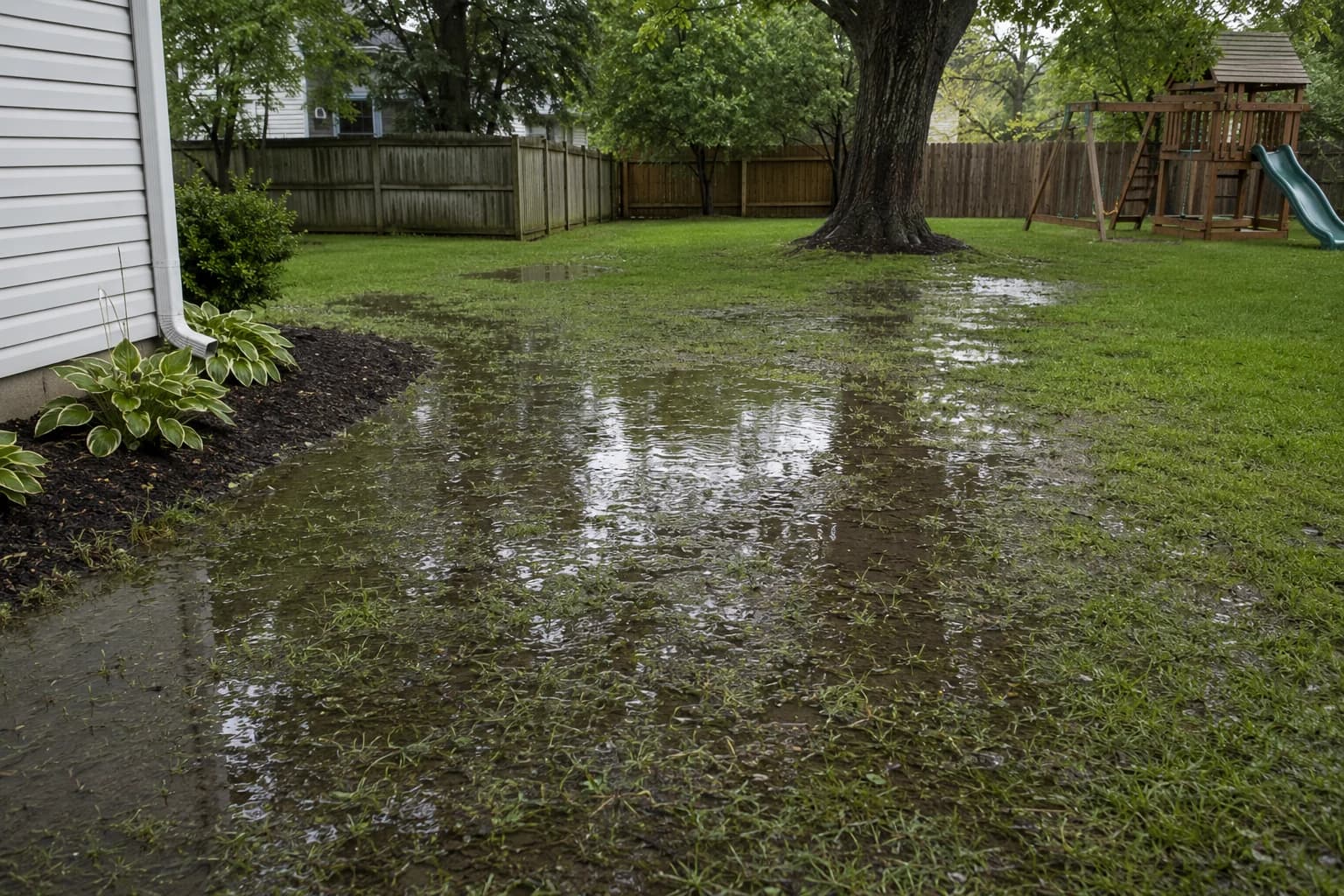
Grading uses soil to raise or lower parts of the yard so water prefers a better path. Around a house, the usual goal is to keep surface runoff from lingering against the walls and to empty obvious low spots.
A swale is a shallow, wide dip — not a ditch with steep sides. Grass can still grow in it. After rain, water follows that low line instead of spreading into the rest of the lawn.
Swales and grade work often connect to a catch basin, a pop-up outlet, or a lower part of the property. The shape collects and aims; the outlet, if needed, finishes the job.
This is surface-water work. It will not drain saturated soil the way a French drain does. It can, however, keep new surface water from pouring into the area a French drain is trying to relieve.
French drain vs. grading
A French drain collects groundwater in a gravel trench. Grading and swales redirect water that is still on the surface. They are different tools. Homeowners are often offered one when they needed the other.
If the lawn is a bowl, filling or reshaping that bowl may remove the puddle without a pipe. If the soil stays wet even after the surface looks level, groundwater may still need a French drain.
They are also used together. Grade the surface so water runs to a swale or a basin; use a French drain where the ground remains saturated. Starting with pipe on a yard that slopes the wrong way can leave the original surface problem in place.
Downspout water dumped onto a reverse slope will keep wetting the same strip until either the discharge point or the grade changes.
What to evaluate before moving soil
Grading is hard to undo casually. The plan should respect where water is allowed to go, not just where it is inconvenient today.
- Existing high and low points across the yard
- Whether water is coming from the roof, a neighbor, or the lot itself
- How close the work sits to the house, walks, and trees
- A place for surface water to end up that is still on an appropriate path
- Whether a swale, a basin, or a below-ground drain should finish the route
- How much soil can be added or removed without creating a new low spot
Related drainage solutions
Grading is often the first chapter, not the whole book.