
What a slow-drying yard feels like
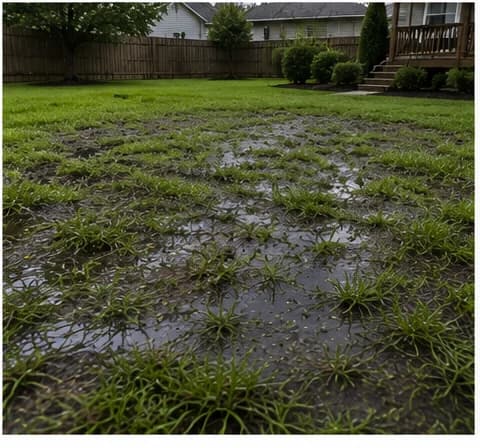
Count the days. After a typical rain, a usable lawn should firm up. This page is for the yard that does not — tracks in the grass on day two, still soft on day three.
You may have seen a puddle during the storm. This page starts after that puddle is gone, or never formed, and the soil is still holding water.
- The ground stays soft for days after the rain has stopped
- Puddles shrink or vanish while the soil stays saturated
- The lawn is slow to become usable again after storms
- The next rain arrives before the last one has finished draining
Why drying takes so long
After rain, two clocks run. Surface water either runs off, evaporates, or soaks in. Soil water moves much more slowly. A yard that looks “drained” from the sidewalk can still be holding yesterday’s storm in the root zone.
Drying is slow when new water keeps arriving after the sky clears — a downspout drip, runoff from higher ground, a low area that cannot empty. It is also slow when soaked-in water has no path out of the soil.
That lag is a drainage-performance problem. The storm ended. The yard has not finished the job.
Why water can remain after the puddles disappear
A puddle is water on top of the ground. When it vanishes, two things may have happened: it ran off, or it soaked in. Soaking in is not the same as leaving.
Once water is in the soil, it moves slowly. If it has no trench, swale, or outlet to accept it, the lawn stays saturated after the puddle is gone. You stopped seeing water. Drainage is not finished.
Surface work handles what sat on top during the storm. A French drain is the usual conversation for what soaked in and stayed. Yard drainage is the plan if both clocks are running.
What the days after the storm can tell you
Watch the sequence, not the product names. A puddle that sits for hours, then vanishes, while the soil stays soft, means water soaked in and stalled. A yard that never ponded but is still spongy on day three is the same subsurface lag without the visible first step.
If a downspout is still wetting the same strip after the rain, that feed is keeping the clock from starting. If a low bowl refills from slope, the surface is not done. Those observations decide what to look at next — they are not a remote design.
What to evaluate on a slow-drying lawn
- How long the ground stays soft after a typical rain
- Whether a puddle appears first or the soil is wet without one
- Repeated sources: downspouts, runoff from higher ground, hardscape
- Low areas and the direction of slope
- Whether anything already buried is supposed to be draining that zone
Related drainage solutions
Slow drying after the storm is a performance problem: water soaked in, or is still arriving, and has not left.