
Signs a French drain may help
These are the kinds of problems homeowners usually notice when water is sitting in the soil rather than running off the surface and leaving.
- The lawn stays spongy days after rain
- The same low area turns to mud every wet spell
- Water seems to rise out of the ground instead of running across it
- A side yard or backyard never fully dries
- Shoes sink in even when it has not rained that day
How an exterior French drain works
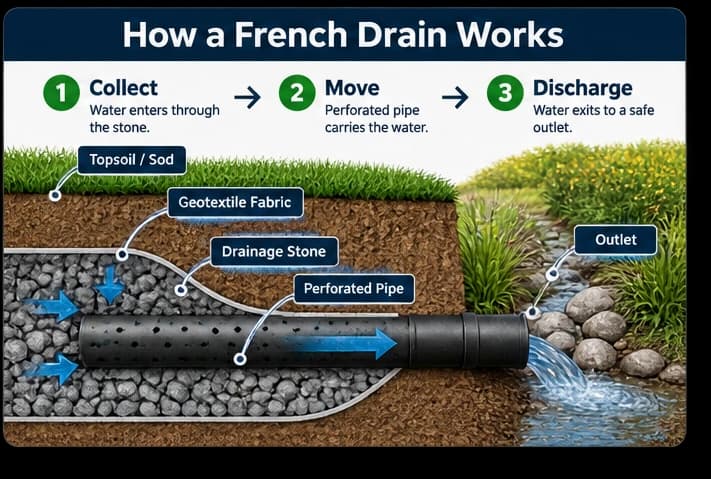
A trench is dug along the path where water needs to travel. Drainage stone goes in the trench. A perforated pipe sits in that stone so water can enter through the holes.
Geotextile fabric is often used to keep surrounding soil from mixing into the stone over time. The stone gives water an easy path. The pipe gives it a route downhill.
The outlet is as important as the trench. Collected water has to leave somewhere that will not create a new wet spot — on the same property or toward a neighbor. If the discharge point is wrong, the drain cannot do its job.
This is an exterior yard system. It is meant to collect and move groundwater in the landscape.
When installation is the appropriate work
Installation is the next step when water is in the soil — saturated turf, a strip that stays wet, groundwater that keeps reappearing — and that water has a realistic place to discharge.
It is not the first trench for a puddle you can cover with a grate, a downspout still emptying at the wall, or a yard that sends surface water the wrong way. Those jobs belong on the other service pages, or on the decision guide, before anyone digs.
Many properties combine methods. Roof water and slope are handled so the trench is collecting groundwater, not fighting a bowl or a splash block. A contractor’s site visit is where that sequence is set.
What to look at before installing one
Trench path and outlet have to be judged on the lot before anyone commits to a layout.
- Where water first appears after rain
- Where it collects and how long it stays
- The slope of the yard and any low bowls
- How downspouts currently discharge
- Whether an existing drain, swale, or catch basin is already in the mix
- A realistic, safe place for water to outlet
- Trees, walks, fences, and other obstructions along a possible trench path
Related drainage solutions
A French drain is one tool. Wet yards often need more than one, or a different one entirely.